How to build a trading signals app: features, compliance and stack
What a trading signals app needs on day one, the admin panel behind it, the compliance questions to settle early, and the stack we used to build EkWiti, a SEBI-registered research app for stocks, futures and options.
A trading signals app looks simple from the outside: a list of trade ideas, a price, a buy or sell. Underneath, it has to deliver those ideas the moment they’re published, explain them clearly enough for beginners, take payments, and stay on the right side of financial regulation. This guide walks through what to plan for, using EkWiti, a research app we built for stocks, futures and options, as the example.
What the app needs on day one
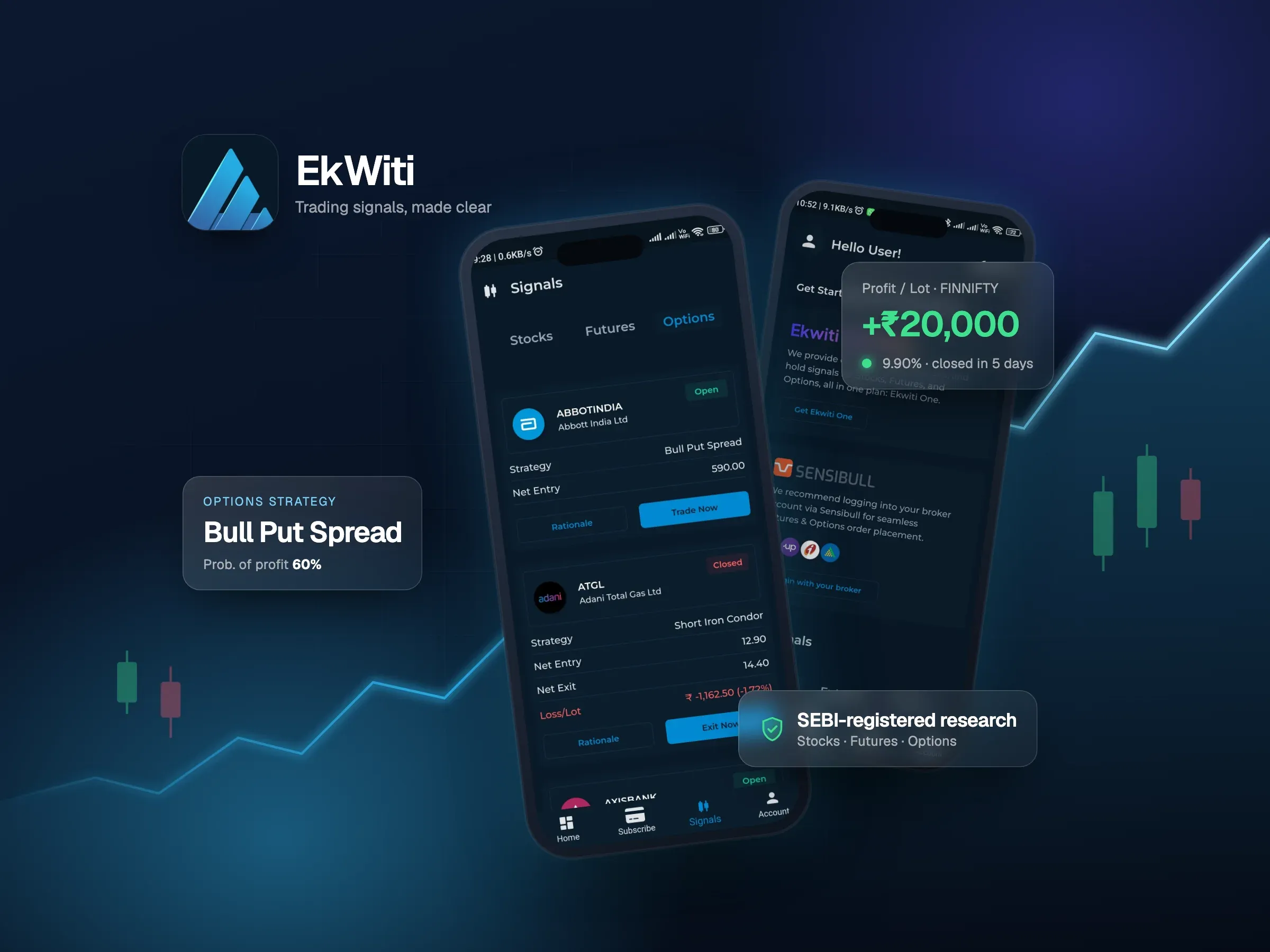
Signals that arrive in real time. The core of the product is the trade idea itself: the stock, future or option, and whether it’s a swing or positional call. When a new signal is published, subscribers need to see it straight away, so the app sends real-time alerts rather than waiting for a refresh.
Live prices next to each idea. A signal means little without the current price beside it. EkWiti shows live market prices alongside its recommendations.
Strategies people can follow. Options strategies with several legs, like Iron Condors, Bull Put Spreads and Short Strangles, are hard to place by hand. EkWiti simplifies them and links each strategy to Sensibull, so traders can review and apply it in a familiar tool.
One clear subscription. Several plans for different markets confuse people. EkWiti bundles its premium services into a single plan, EkWiti One, and takes payments securely through RazorPay.
An interface for every level. Beginners need plain explanations; experienced traders want detail without clutter. Designing for both is mostly about hierarchy: the essentials first, details one tap away.
The admin panel is half the product
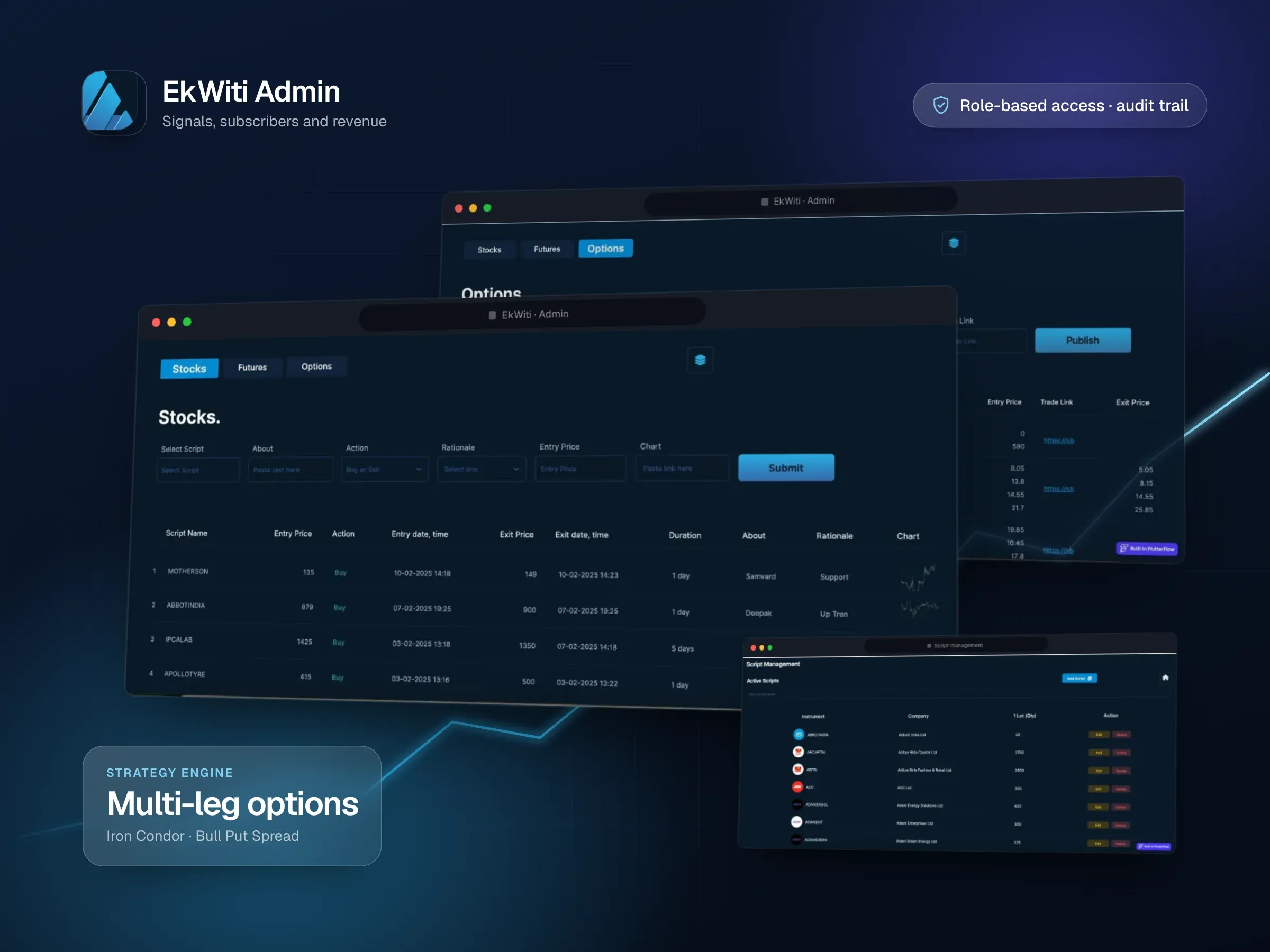
Signals don’t publish themselves. Behind EkWiti sits a web admin panel where the team runs the service:
- publishing signals and deploying them to all active subscribers at once;
- configuring multi-leg strategies and comparing how they perform;
- managing subscriptions and reconciling RazorPay payments;
- tracking signal performance, active users and revenue on live dashboards;
- controlling who can see and change what, with a full audit trail.
Plan the admin panel together with the app. If it’s left until later, the team ends up publishing signals and fixing subscriptions by hand.
Settle compliance early
Financial apps carry rules that shape the product, so settle them before design starts.
- Registration. In India, research recommendations like EkWiti’s fall under SEBI’s research analyst rules, and EkWiti is a SEBI-registered research platform (INH000012713). Other countries have their own regulators and rules. Check with a lawyer in your market before launch.
- Records. Regulated services usually need to keep records of what was recommended, when, and to whom. EkWiti’s admin panel keeps audit logs, retention policies and compliance reports for this.
- Disclaimers and disclosures. Decide with your advisers where they appear in the app, and make sure people actually see them.
None of this is legal advice. It’s a reminder that compliance decisions change the features you build, so they belong at the start of the project, not the end.
The stack we used
EkWiti and its admin panel are both built with FlutterFlow and Firebase. That choice suited the project:
- FlutterFlow produced the iOS and Android app and the web admin panel from one visual toolset, which kept the build fast.
- Firebase handles sign-in, data and real-time updates, so new signals reach subscribers immediately.
- RazorPay handles subscription payments; Sensibull links carry strategies into a trading tool people already use.
If your app needs heavy custom logic, very high message volumes or unusual integrations, a fully custom Flutter app with its own backend may suit better. Our article on FlutterFlow vs Flutter goes through that choice.
A sensible first release
- Signals with live prices, for one market segment you know best.
- One subscription plan with secure payments.
- An admin panel to publish signals and manage subscribers.
- Records and disclaimers your advisers have approved.
Strategy tools, more markets and deeper analytics can follow once real subscribers are using it.
If you’re planning a trading, research or fintech app, tell us about it and we’ll suggest the simplest way to build a first version.