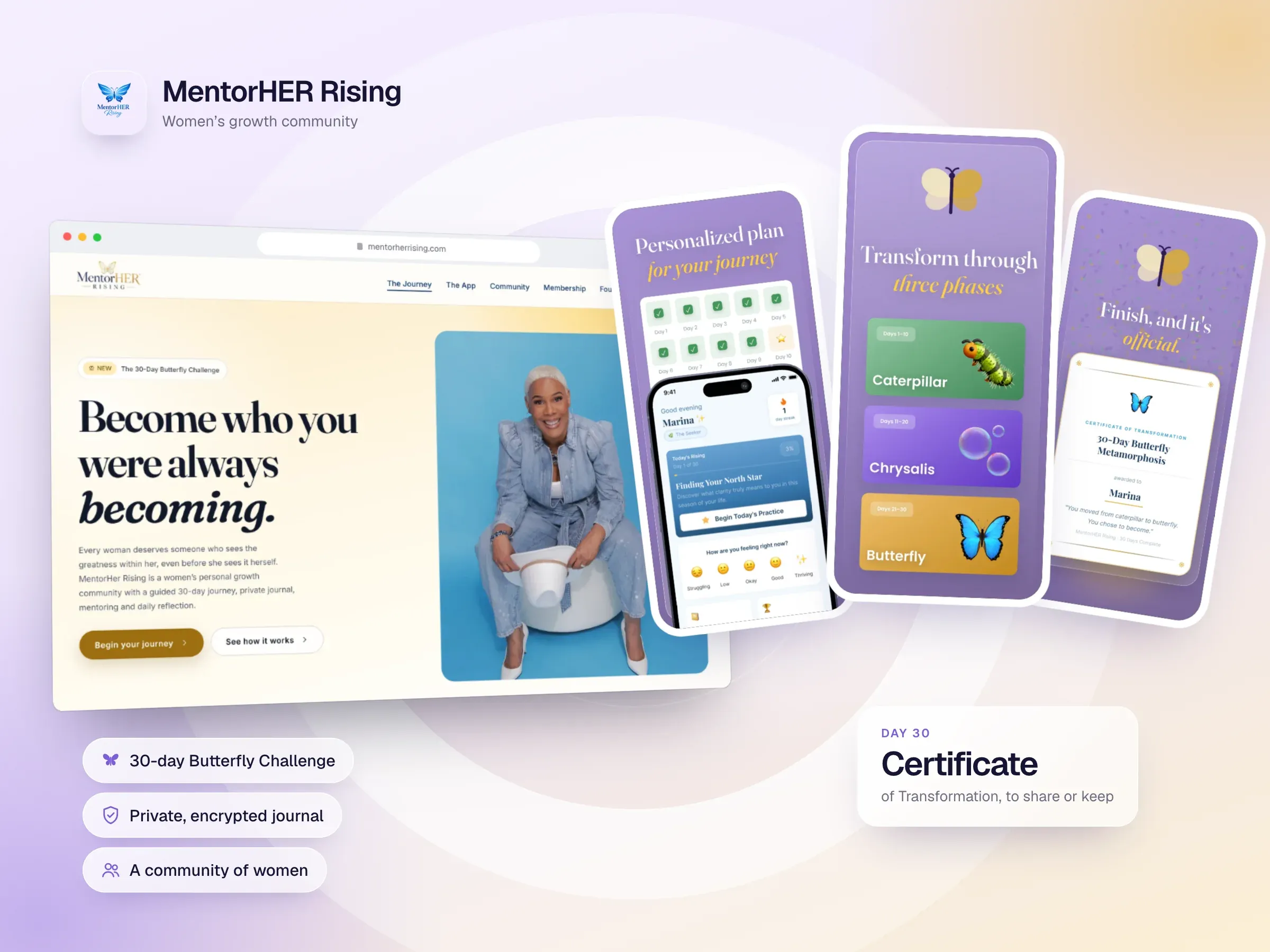
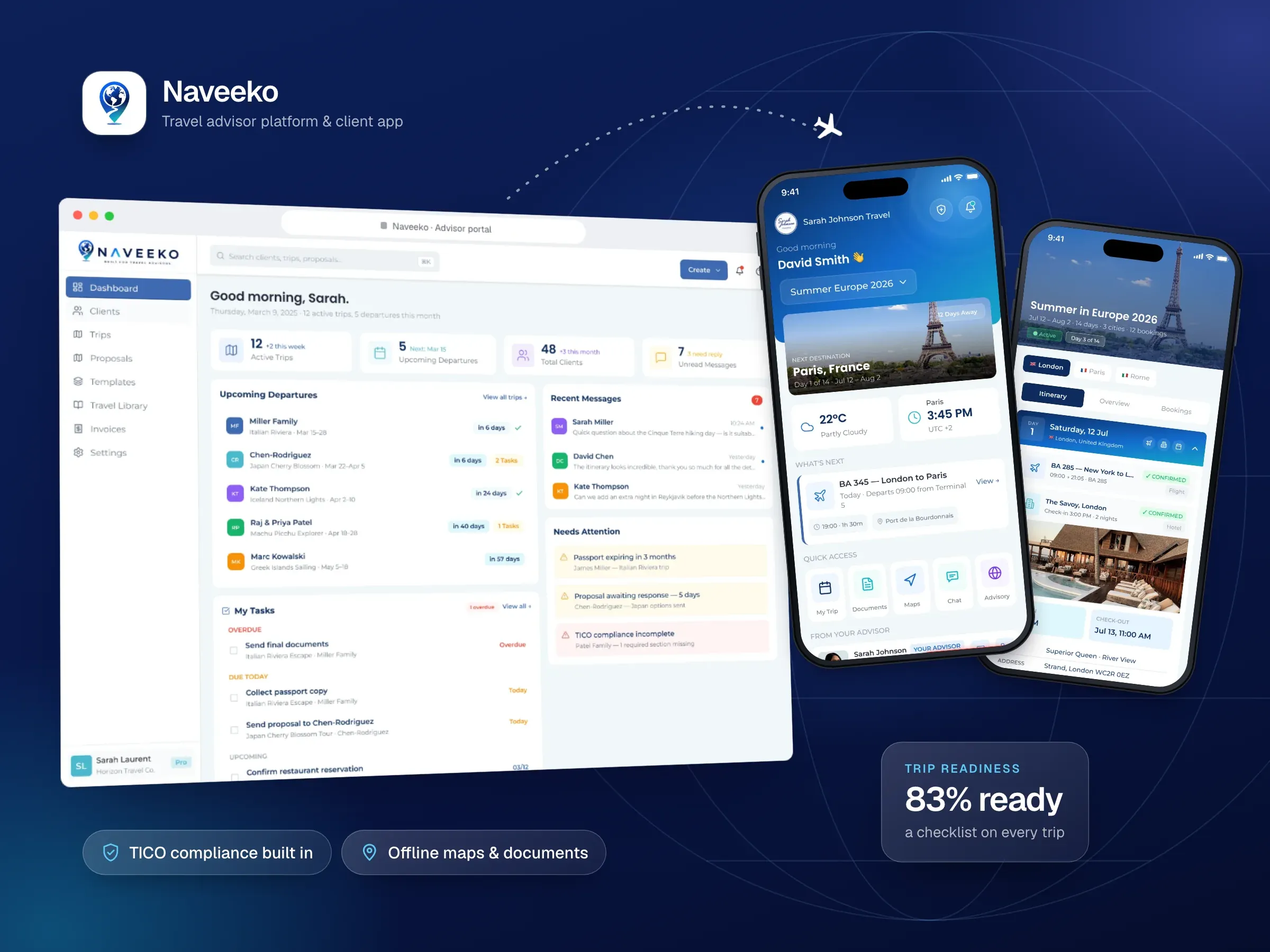
Products people find confusing
Sign-ups drop off, support tickets pile up and users ask how to do basic things. That's a design problem, and it's fixable.
03UI/UX Design
Good design is mostly invisible. People find what they need and get things done without thinking about it. We research, structure and design products that work that way, with developers involved from the very first sketch.
Sign-ups drop off, support tickets pile up and users ask how to do basic things. That's a design problem, and it's fixable.
Designing and testing a clickable prototype first is the cheapest way to avoid spending months building the wrong thing.
Every screen looks slightly different and every new feature takes longer than it should. A shared component library fixes both.
Interviews, usability tests and analytics show where people actually struggle, so we fix real problems rather than assumed ones.
Realistic prototypes let you test ideas with users and stakeholders before a single line of code is written.
Reusable components and design tokens that keep your product consistent as it grows and new people join the team.
States, edge cases and specs documented properly. Our designers sit next to engineers, so what we design can actually be built.
Most design problems aren’t visual. A checkout that loses customers, a dashboard nobody understands, an onboarding flow people abandon: these start with a mismatch between how a product works and how people think. We start by listening. Short interviews, a look at your analytics and a few usability sessions usually make the real problem obvious, and then the solution is much easier to agree on.
Once the structure is right, we design an interface that looks like your brand and nobody else’s. Typography, colour, spacing and motion are chosen to make content easy to read and actions easy to find. We design for real content in every state, including empty screens, errors, loading and long names, not just the perfect screenshot.
A design system is a shared set of components and rules that your designers and developers both use. It keeps the product consistent, makes new features faster to design and build, and stops every screen from becoming a one-off. We build systems that are practical for the size of your team, not a hundred-page manual nobody opens.
Around one in six people lives with some form of disability, and all of us use products in bright sunlight, on slow connections or with one hand. We design to WCAG 2.2 guidelines from the start, which is simpler and cheaper than fixing accessibility after launch.
Interviews, analytics and a review of your current product to find out where people get stuck and why.
User flows and wireframes that make complicated tasks simple, agreed before any visual design starts.
A distinctive visual language and a reusable component library built around your brand.
Prototype testing with real users, refinements, then a clean handoff to your developers or ours.
Straight answers to what people usually ask before we start working together.
Still curious? Ask us anythingUX (user experience) design is about how a product works, meaning the flows, the structure and whether people can get things done. UI (user interface) design is how it looks and feels, including layout, typography, colour and components. You need both, and we do both.
Yes. Even a handful of short interviews or usability sessions usually reveals the biggest problems. We scale the research to your budget and timeline.
Yes. We deliver organised Figma files, a component library and documentation, and we stay available to answer questions while your team builds.
Usually, yes. We look at where users struggle most and fix those areas first, then bring the rest of the product in line with a shared design system over time.
It depends on the size of the product and how much research is involved. After a free discovery call we send a written proposal with a clear scope and price.
Yes. We design to WCAG 2.2 guidelines, covering colour contrast, readable type, keyboard access and clear focus states, because accessible products are better products for everyone.
Custom, responsive websites that bring your brand to life and make every interaction simple.
Intuitive mobile apps that connect with your users and support your business as it grows.
Interactive games and immersive experiences that invite your audience to explore, learn, and engage.
Share your vision with InfoTechsRealm. From websites and apps to immersive digital experiences, we bring design and engineering together to create something your users will love.