Brands that want attention
An AR try-on, a branded mini-game or an interactive launch gets people spending minutes with your product instead of seconds.
04Game & AR/VR Development
We build games and AR/VR experiences for studios, brands and educators, from mobile games and browser-based WebXR to VR training. Every project starts with a playable prototype, because fun and comfort are much easier to find than to describe.
An AR try-on, a branded mini-game or an interactive launch gets people spending minutes with your product instead of seconds.
VR simulations let people practise risky or expensive tasks safely, as many times as they need.
Extra hands for prototyping, porting, optimisation or getting a game over the finish line.
Playable prototypes in the first weeks show what works before the big production costs arrive.
We profile and optimise for the phones, browsers and headsets your audience actually owns, not just a powerful dev machine.
Browser-based 3D and AR opens from a link or a QR code, which removes the biggest barrier to people trying it.
Store submission, updates and new content after release, so your game or experience keeps people coming back.
We make games for mobile, PC and the web, from casual and educational games to branded experiences. Every game starts with the core loop, the simple thing players repeat, because if that isn’t fun, nothing else will save it. We prototype it quickly, put it in front of real players, and only then scale up art and content.
Augmented reality lets people place a product in their own room, try it on, or see how something works in 3D. For brands, it’s one of the few formats people choose to spend time with. We build AR for phones and the browser, optimised so it loads quickly and tracks reliably in real-world lighting.
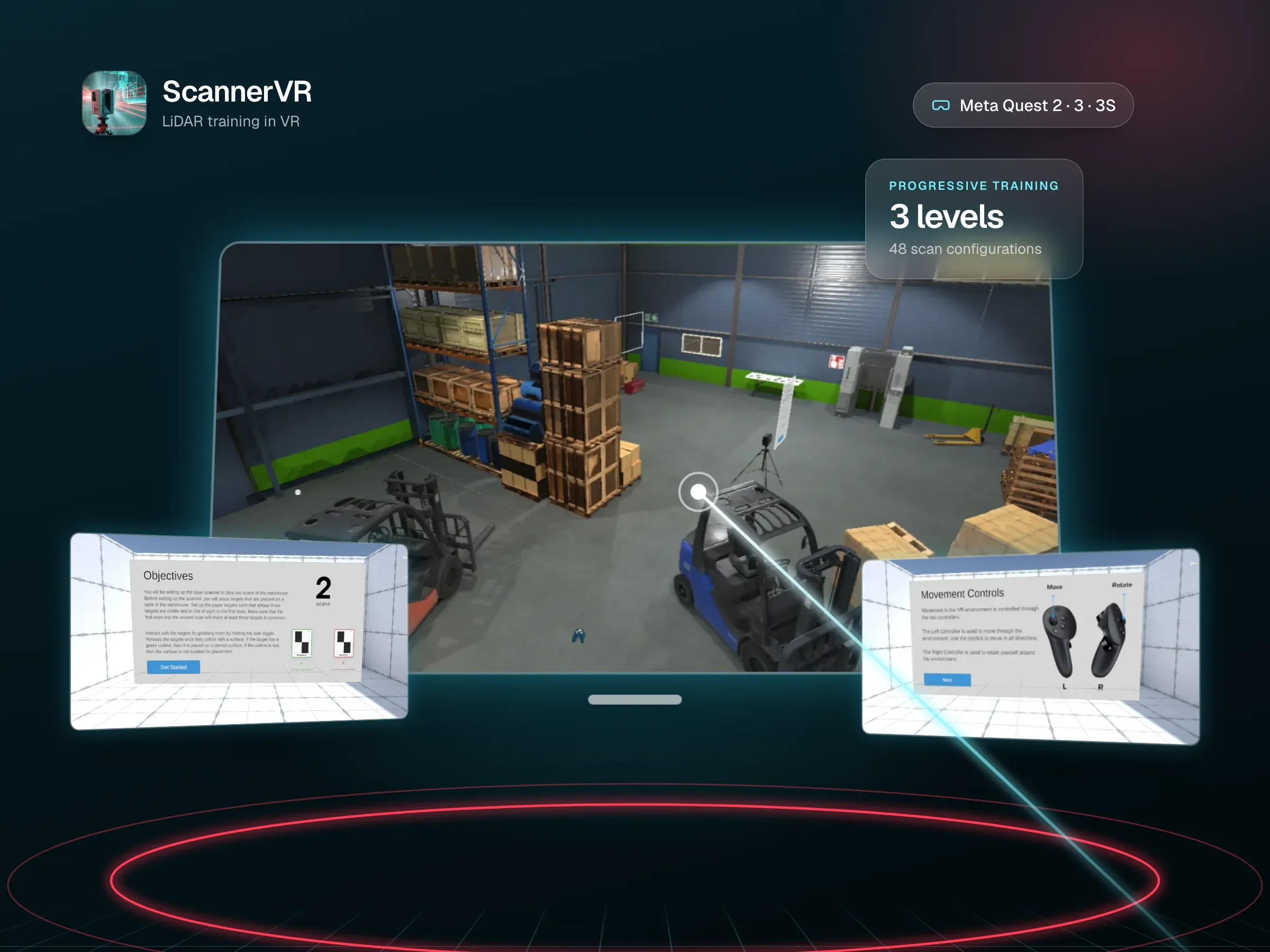
Some things are expensive, dangerous or simply impractical to practise in real life. VR simulations let people learn by doing, repeat tasks as often as they need and make mistakes safely. We design training around clear learning goals, and we pay close attention to comfort so sessions don’t leave people feeling unwell. See how we approach it on our VR training simulators page, and what we build for standalone headsets on our Meta Quest development page.
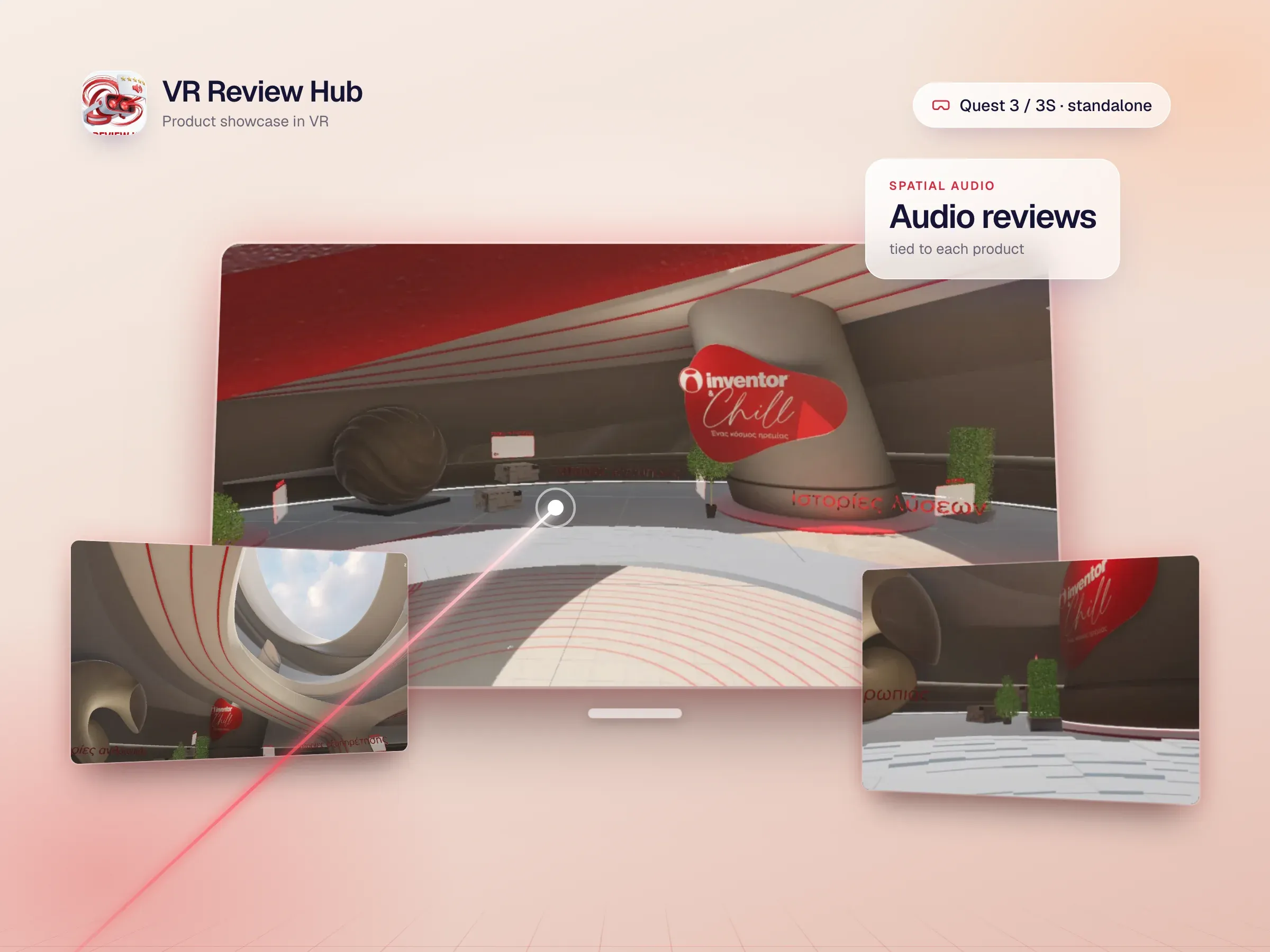
The biggest drop-off in any AR or VR project is asking people to install something. WebXR experiences open straight from a link or a QR code on a phone, a laptop or a headset. We build them with Three.js and WebXR, keeping file sizes small so they load fast even on mobile data. When a scene needs full Unreal Engine quality instead, we stream it to the browser with Pixel Streaming.
Core loop, storyboards and quick technical spikes to confirm the idea works on your target devices.
A playable build early on, tested with real players, to find the fun and fix comfort issues before production.
Art, code, sound and optimisation for every target device, with regular playable builds for you to try.
Store and headset launches, then live updates, fixes and new content based on how people play.
Straight answers to what people usually ask before we start working together.
Still curious? Ask us anythingMostly Unity and Unreal Engine for games and VR, and Three.js with WebXR for experiences that run in the browser. We pick the engine that suits your platforms, your art style and your budget.
Browser-based WebXR is best when you want as many people as possible to try it, because there's nothing to install. A native app makes sense for longer experiences or when you need advanced tracking. We'll help you choose.
We build for the platforms your audience uses, including standalone VR headsets, mobile AR on iPhone and Android, and the web. We confirm exact device support in the proposal and test on real hardware.
A first playable prototype usually takes a few weeks. It's the fastest way to check that the idea is fun and technically sound before committing to full production.
We can produce 3D models, environments and animation, or work alongside your own artists and style guides.
It varies a lot with scope, art style and platforms. After a free discovery call we send a written proposal with a clear scope and price, often starting with a prototype so you can see results early.
Custom VR simulations for technical, safety and medical training, built in Unity and Unreal for Meta Quest, PC VR and the browser.
Photoreal Unreal Engine 5 showrooms, simulations and walkthroughs that stream to any browser with Pixel Streaming, or run in VR.
VR training, mixed reality games and product experiences for Meta Quest 3, 3S and Quest 2, built in Unity and Unreal to run smoothly on a standalone headset.
Custom, responsive websites that bring your brand to life and make every interaction simple.
Intuitive mobile apps that connect with your users and support your business as it grows.
Thoughtful interfaces that turn complex ideas into clear, engaging experiences.
Share your vision with InfoTechsRealm. From websites and apps to immersive digital experiences, we bring design and engineering together to create something your users will love.