GameMultiplayer 2D GameCompetitive Fishing
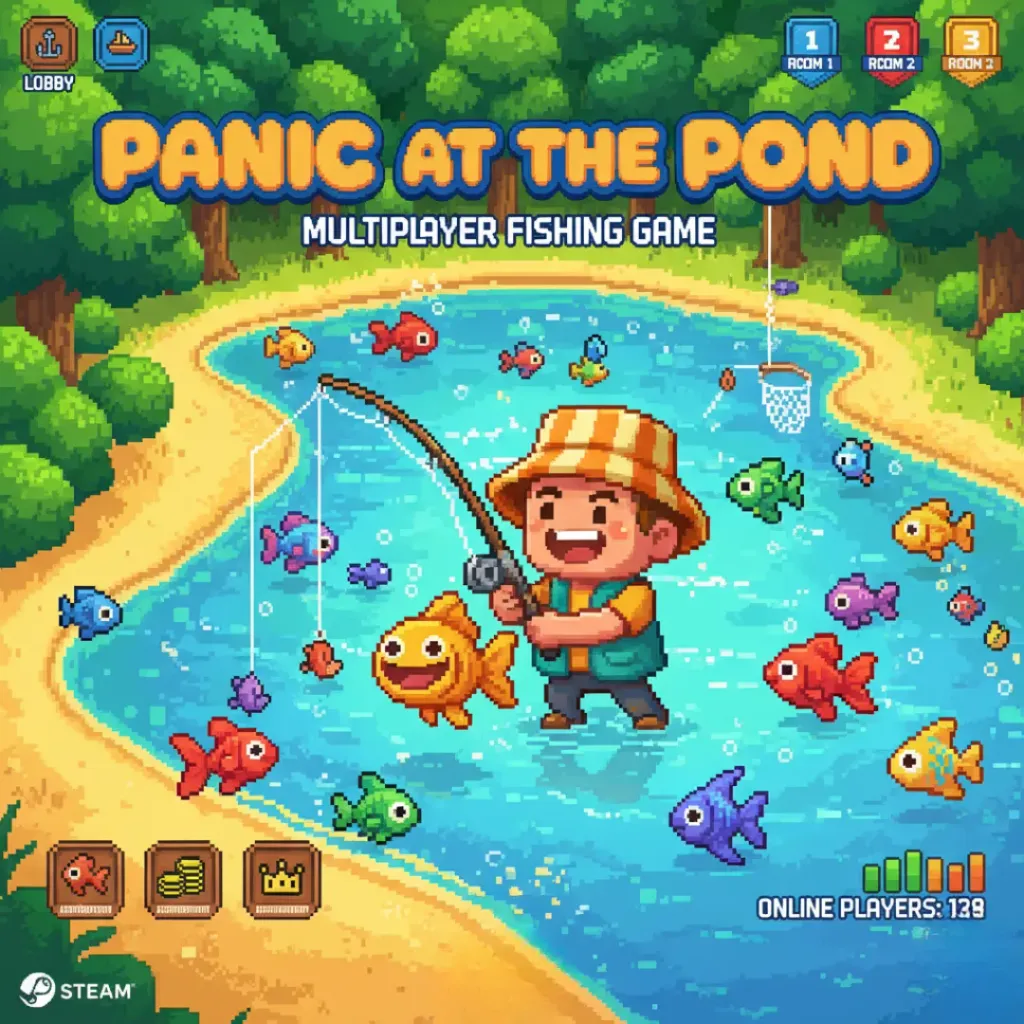
Panic at the PondMultiplayer Fishing Game
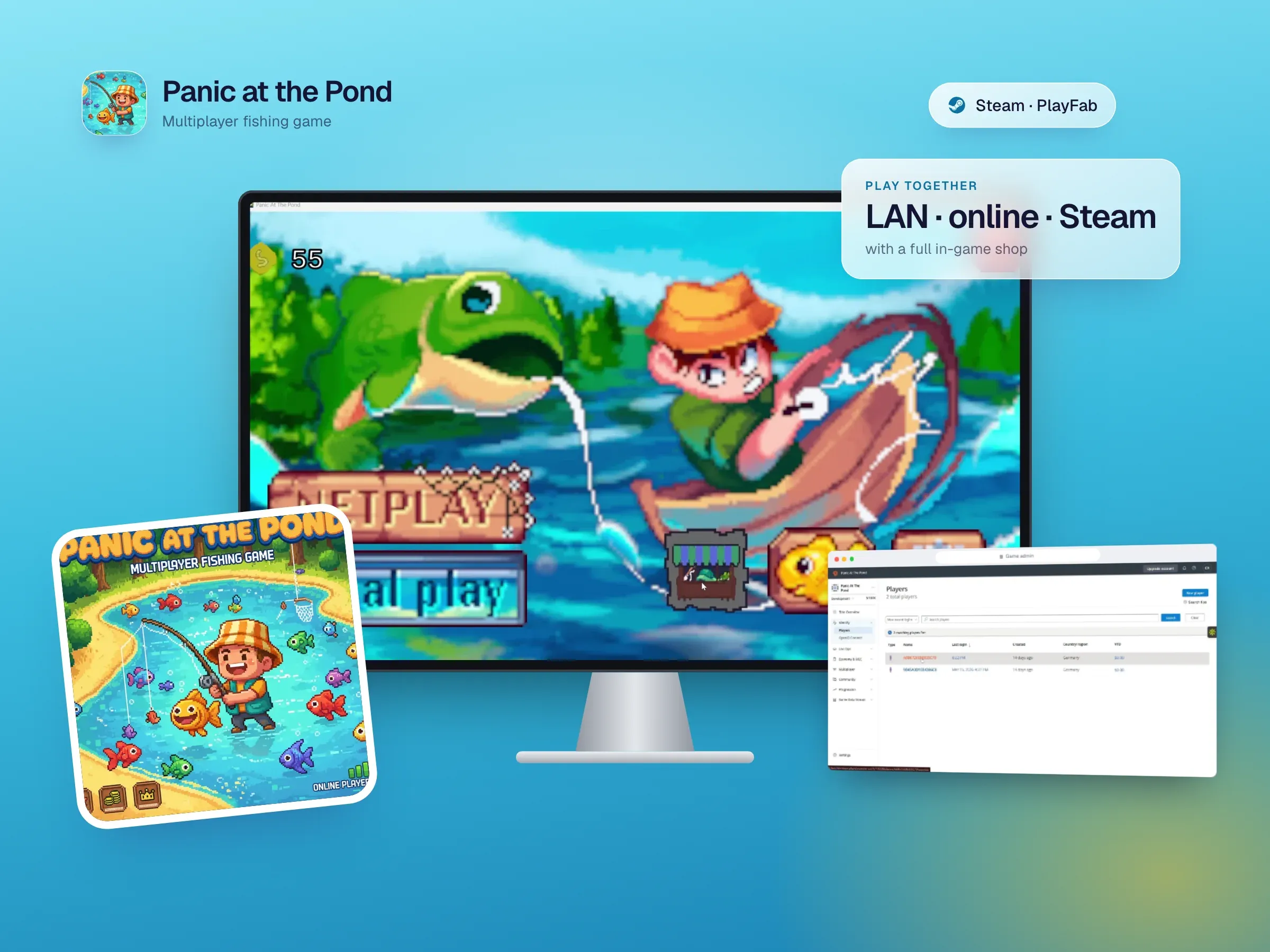
A charming 2D multiplayer fishing game built in Unity 6, featuring cross-platform networking, Steam and PlayFab integration, multiple game modes, AI goldfish behavior, and a full virtual-currency shop for gear and cosmetics.
- Category
- Game
- Services
- Game & AR/VR Development
- Built with
- Unity 6, C#, Mirror Networking +10 more
Panic at the Pond is a feature-rich multiplayer fishing game that delivers engaging gameplay across both local and global networks while layering in a complete online economy. Developed in Unity 6, the game combines charming pixel art aesthetics with sophisticated networking and backend infrastructure. Players compete in real-time fishing challenges where timing, skill, and strategy determine success across multiple game modes ranging from relaxed casual play to more competitive score-based sessions.
The game supports multiple networking paradigms: LAN play for local gatherings, internet play for global matchmaking, and Steam integration via Steamworks API. The networking layer implements both Mirror and Photon solutions, providing flexibility for different deployment scenarios and platform requirements. A comprehensive lobby and room system enables players to create custom matches with public visibility, password-protected private rooms, and friends-only lobbies. Host migration helps preserve sessions when the original host disconnects, minimizing interruption.
On top of the core multiplayer loop, Panic at the Pond integrates PlayFab as a backend service to manage player accounts, cloud-saved progression, and a robust virtual economy. Players earn in-game currency through matches and challenges, then spend it in an in-game shop to purchase new outfits, hats, boats, fishing rods, hooks, and different types of fish or bait items. The shop and inventory system is fully data-driven from PlayFab, supporting server-authoritative transactions, multiple virtual currency types, and persistent ownership across platforms. This economy system ties directly into progression, giving players a steady sense of reward without compromising competitive balance.
Core gameplay features AI-driven goldfish and other fish types with movement algorithms that respond to player actions, creating dynamic and unpredictable fishing opportunities. The UI/UX is tuned for fast multiplayer sessions, with responsive controls, clear feedback for bites and tension, and scalable layouts for both desktop and mobile builds. Steam achievements, statistics, and PlayFab player data tracking help drive long-term engagement. Professional audio design includes water ambience, bite and reel SFX, and polished UI sounds, all controllable through in-game audio settings. The project demonstrates mastery of networked game development, live-ops-ready backend integration, and the design of a fair yet rewarding virtual economy inside a social multiplayer experience.
See it in action
What makes it work
Cross-platform multiplayer: LAN, Internet, and Steam
Dual networking support with Mirror and Photon for flexibility and redundancy
Steam integration with achievements and statistics tracking
PlayFab-backed player accounts, cloud saves, and progression
Full virtual currency system with earnable in-game currency
In-game shop for outfits, hats, boats, rods, hooks, and other fishing gear
Server-authoritative purchases and inventory management via PlayFab
Multiple game modes ranging from casual to competitive score-based sessions
Intelligent AI fish with dynamic movement and response to player actions
Comprehensive lobby and room system with public, private, and friends-only visibility
Password-protected private rooms for custom groups and tournaments
Host migration for increased connection resilience
Responsive and intuitive fishing mechanics tuned for multiplayer latency
Professional SFX and VFX for bites, casts, catches, and UI interactions
Optimized for both desktop and mobile platforms
The challenge
Building Panic at the Pond as a live multiplayer title with a persistent online economy required solving networking and backend challenges simultaneously.
5 problems we had to solve, from networking, architecture, in-game economy and more.
- 01 / 05Networking
Responsive fishing over P2P
Reliable P2P synchronization across LAN and internet environments demanded careful handling of latency compensation, packet loss, and bandwidth usage to keep fishing interactions feeling responsive.
- 02 / 05Architecture
Two networking stacks, one game
Supporting both Mirror and Photon meant designing clean abstraction layers so gameplay logic remained networking-agnostic while still leveraging each framework's strengths.
- 03 / 05In-game economy
An economy that can’t be cheated
Integrating PlayFab added another layer of complexity: virtual currency balances, inventory items, and shop purchases all needed to be server-authoritative, synchronized across devices, and resilient to disconnects or partial failures.
- 04 / 05Design
Rewarding, never pay-to-win
Ensuring that cosmetic and gear upgrades felt rewarding without introducing pay-to-win advantages required tight collaboration between design and backend rules.
- 05 / 05Real-time
Every client in sync
Keeping achievements, leaderboards, audio/VFX events, and room visibility rules correctly synchronized across all clients pushed serialization, state management, and testing to production-grade standards.
5 of 5 solved
Got a problem like these? We’d like to hear about it.
Inside Panic at the Pond
Built with
- Unity 6
- C#
- Mirror Networking
- Photon PUN 2
- Steam API
- PlayFab (Backend, Auth, Economy)
- P2P Networking
- WebSockets
- AI Pathfinding
- Virtual Currency & Inventory System
- Pixel Art Animation
- Audio Management
- UI/UX Framework
Have a project like Panic at the Pond?
Tell us what you want to build. You’ll get a free discovery call and a clear, written proposal.
More work like this
All projects