How to build a meditation app: features users expect
The features people expect from a meditation and wellness app, how to handle audio, subscriptions and private data, and what we learned building Kepasa Harmony with FlutterFlow and Firebase.
Meditation and wellness apps look calm on the surface, and the best ones work hard to stay that way: audio that never stutters, reminders that help rather than nag, and private reflections that stay private. This guide covers the features people expect, the technical decisions behind them, and what we learned building Kepasa Harmony, a meditation and mental-wellness app for iOS and Android.
The features people expect
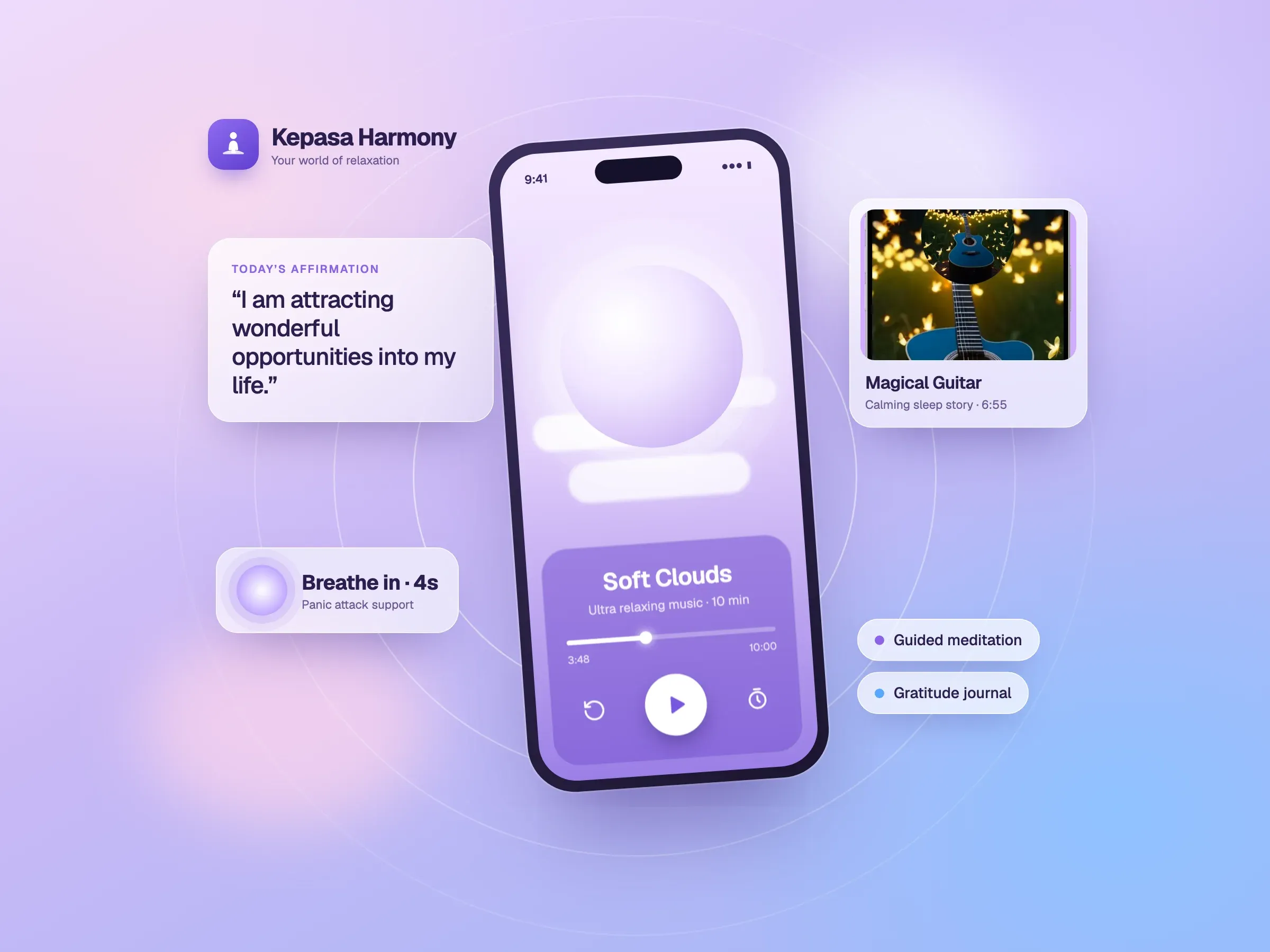
A guided meditation library. The core of the app. Organise it by what people are going through, not by length: Kepasa Harmony’s meditations are grouped around anxiety, stress, self-esteem, procrastination and more.
Sleep content. Sleep stories and calming audio give people a reason to open the app every night. Kepasa Harmony includes professionally narrated sleep stories.
Short daily practices. Not everyone has twenty minutes. Positive affirmations and quick exercises give people something to do in a minute or two.
Help in hard moments. A dedicated, easy-to-reach section for acute moments, like Kepasa Harmony’s panic-attack support with immediate grounding techniques, can be the reason someone keeps the app.
A journal. A gratitude or mindfulness journal turns listening into reflection. In Kepasa Harmony, reflections are encrypted, because they’re personal.
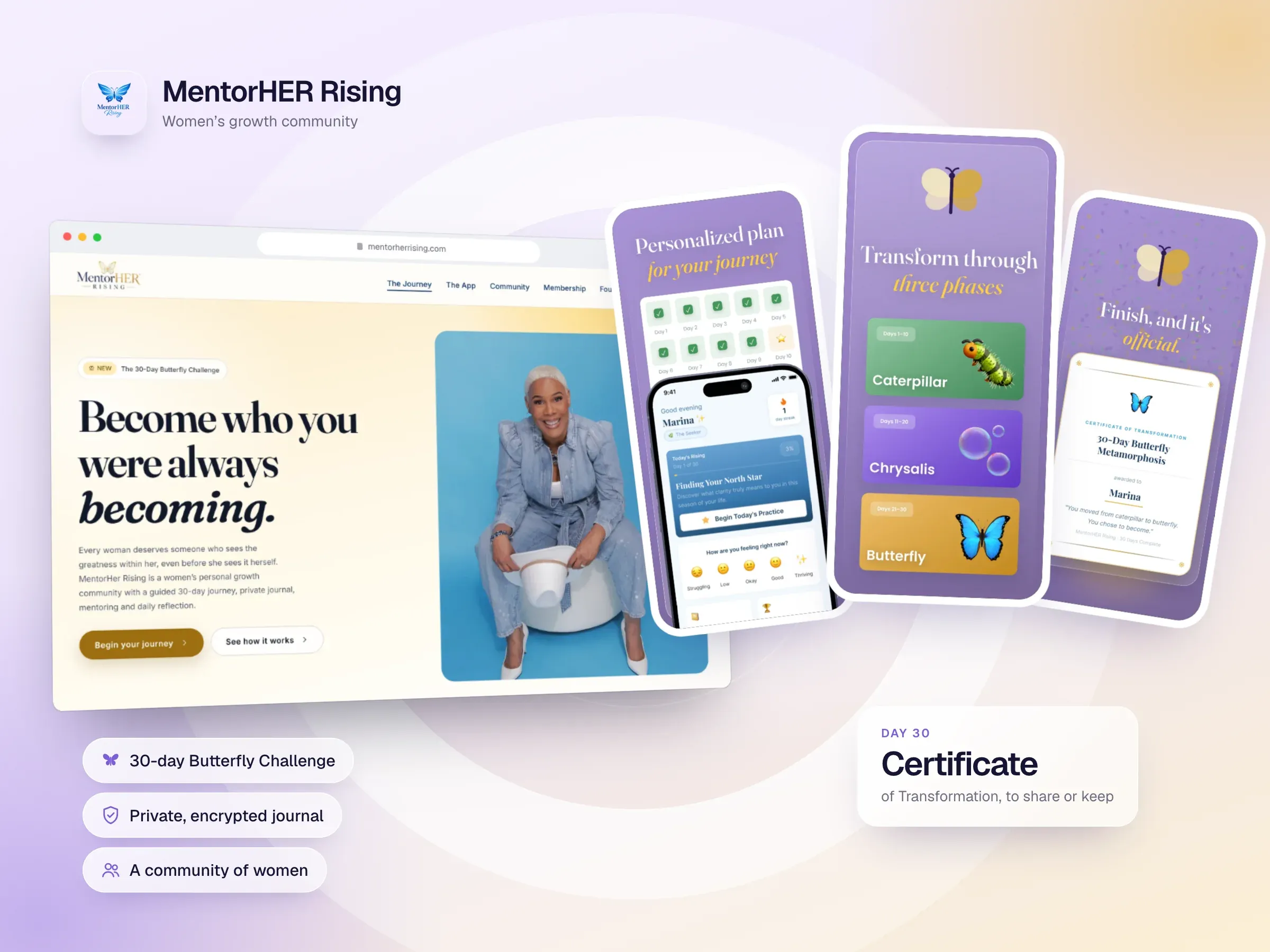
Progress people can see. Streaks, minutes and history give a gentle sense of achievement. Keep it encouraging: a missed day shouldn’t feel like failure. We took the same approach in MentorHER Rising, where members choose how to continue after a missed day instead of losing their progress.
Reminders that fit the person. Daily reminders help habits form, but only if they arrive at a time that suits each user. Kepasa Harmony schedules notifications around each person’s preferences and how they use the app.
The technical decisions that matter
Audio that works on any connection
Audio is the product, so it can’t stutter. Stream it for quick starts, size files sensibly for mobile networks, and consider letting people download favourites for travel and bedtime. Kepasa Harmony’s streaming was optimised for varying network conditions and device storage.
Some features need special care. Kepasa Harmony’s bilateral music, which moves sound between the left and right ear, needed careful audio engineering to work well without losing quality.
Subscriptions and free trials
Most wellness apps run on subscriptions, often with a free trial. That means handling trials, renewals, cancellations and what each person is entitled to, on both app stores. Plan this early: Kepasa Harmony’s premium subscription with a free trial needed careful entitlement handling with Firebase.
Privacy by design
People share their moods and private thoughts with these apps, so privacy can’t be an afterthought:
- encrypt personal reflections;
- collect only what you need;
- let people export or delete their data easily. Kepasa Harmony offers data deletion options designed for GDPR.
Be careful with health claims
A wellness app is not a medical treatment. Describe what the app offers, not what it cures, and involve qualified professionals in sensitive content, such as anything for anxiety or panic. If your app makes medical claims or targets a medical condition, regulators may treat it as a medical device, so take advice before you write that copy.
How we built it
Kepasa Harmony is built with FlutterFlow and Firebase: FlutterFlow for the iOS and Android app, and Firebase for sign-in, data, cloud functions and notifications. For a content-led app with standard screens, that combination is quick to build and easy to keep updating. Our FlutterFlow vs Flutter article explains when a fully custom build is the better choice.
A sensible first release
- A focused library: a few dozen high-quality sessions for the problems your audience cares about most.
- Sleep content and one quick daily practice.
- Simple progress tracking and a reminder.
- A subscription with a free trial, and clear privacy controls.
Journals, community features and personalisation can follow once you know what your users return for.
If you’re planning a meditation, wellness or habit app, tell us about it and we’ll suggest the simplest version worth launching.